Ten Personal Rules for Getting Things Done

Ten Personal Rules for Getting Things Done

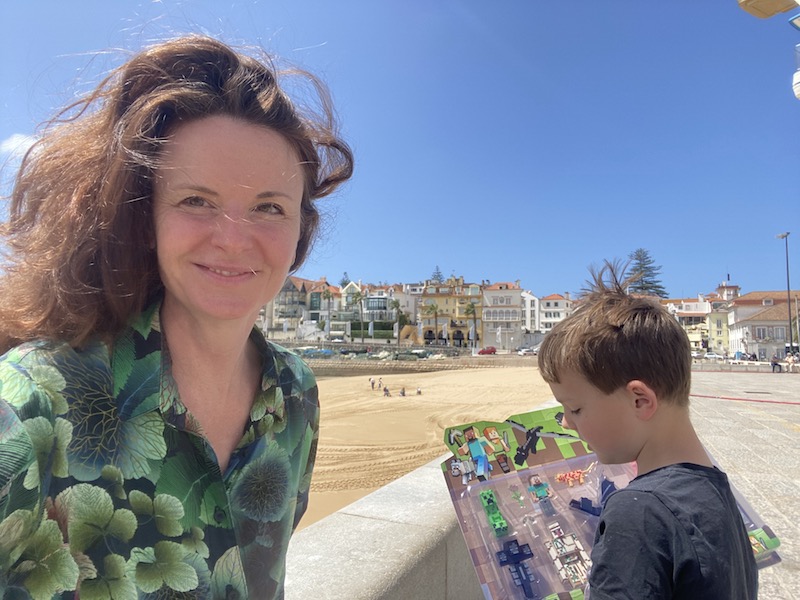
In just a few weeks, I have moved myself and my two children from Nørrebro in Denmark to Cascais in Portugal.

It has been a huge project with so much involved: finding a new house, a new school, getting the old apartment sold, sorting, packing, and shipping our belongings, emptying an apartment of big and small things, getting it cleaned, closing a business and opening a new one, getting the new house furnished, getting gas, internet, and phones up and running, getting a local bank account, hiring a housekeeper, getting the new house cleaned and organized, and unpacking all the boxes.

How did I get it done? Alone with two children, and so fast?

I’ve realized that I have an operating system without knowing it. I have a certain way of doing things, and it’ actually pretty efficient.

Here are my key principles:

1. Write It Down

Between you and me: I love making lists.

When you write something down, it relieves the brain of the burden of trying to remember it.

The to-do list has a bad rep, but it should be honored.

Some people say it makes you focus on chasing your own tail because you focus on the amount of things that need to be done without prioritizing.

I say that no one can remember much in their head, so it’s important to get it all written down, and then you prioritize the tasks afterwards.

Here’s how I do it:

I write a large list on the first page of a notebook. I set aside pages so I can keep adding things to the “main list”.

I use the rest of the book for making daily lists. I make a new page every day. When I put the daily list together – which I do the night before so I can sleep peacefully – I make sure that there is at least one task that is important and high-priority.

2. Get Something Done Every Day

You need to move forward smoothly, and that’s why it’s important to get something done every day. As the saying goes: the way to eat an elephant is one bite at a time.

I actually used the same principle on an hourly schedule when I had to pack tons of boxes and later unpack the same boxes. It seems so unmanageable to stand in front of a mountain of 32 boxes.

I told myself just to take one box at a time and that it was okay that it was just one box for now. One box an hour would get me far in a few days.

3. Do the Hardest Thing First

My oldest son (8) has already learned this principle. He abhors having the nail on his little toe cut. That’s why he always asks me to cut it first, and I praise him every time for it. Doing it that way, it’s over fast, and he doesn’t have to dread it the rest of the time.

There are always some tasks that are fun, and some that are difficult. Most people tend to take on the easy task first. Instead, you need to go consciously after the worst task first, getting it out of your way so it doesn’t bother you the rest of the day.

4. Do the Little Things Right Away

“Just answer right away.”

My favorite professor at NYU told our class this. I no longer remember the context, but I remember the point.

If you can reply with a simple message to an email, reply immediately so it doesn’t become yet another item on your to-do list. It keeps the number of things on your list down.

For small things that take less than a minute to get done, just do them right away. Of course, you need to be a little mindful when checking emails so that you don’t constantly interrupt yourself.

In the relocation situation, this has meant that if I spotted something important that I could not forget to pack, I immediately went and put it in a box so that the thought would not bother me again and again.

5. Do It At the Right Time

Some tasks require you to be vigilant and sharp.

Do those tasks when you are vigilant and sharp.

I can’t write blog posts late at night. They turn out better if I write them early in the day. So, I’d rather go to bed early and set the alarm clock for 5 a.m. to get them written.

6. Delegate Tasks

I’m a single mom with no parents or family around, but I still get a lot of help from others.

Some are paid helpers and some are not.

I have an accountant and a lawyer in Portugal to help with the practicalities of getting a NIF (this is the kind of tax number you need to order or buy anything bigger than a pencil).

I hired someone to shut the old apartment down.

At the other end, I hired someone to open the new apartment and pick up and assemble the new furniture.

I also got help from friends.

A friend with a flair for decor made a giant IKEA shopping list for me. Another friend helped me empty the last of the things out of the apartment.

A third friend, who herself has lived in Portugal, flew in with us and helped keep track of the boys a little and helped me find my way to the nearest supermarket and back.

While she was here, I hired a cleaning assistant and a housekeeper.

7. Make Quick Decisions on Non-Essentials

Some decisions require careful consideration and analysis. Most decisions don’t.

Who to marry is a big decision, but where the first date takes place isn’t really that important. That’s the kind of decision you need to force yourself to make in less than a minute, because if you’re not careful, it will swallow hours of your time. Which country you want to move to is important, but which airline or moving company you choose is not.

In the investment world, it’s important to analyze what you want to invest in, but which platform you use is less important. I mention this because many actually get stuck there, which is silly.

In my process, this has meant that it took me 45 seconds to choose a name for the new companies that I opened, 20 seconds to choose a bank, 20 seconds to choose an ISP, and so on.

These are small decisions that you shouldn’t let drag on.

8. Get There Early

As I say to my oldest child: “the difference between leaving early and being late is the difference between being able to appreciate the birds chirping.”

When it’s a habit, it’s really the difference between being happy or not.

I can’t stand being late. It creates chaos, a foul mood, and it gives a bad first impression

Leave early, show up first, and be prepared.

This also applies when you have to finish packing or when you’re going to the airport.

Life is more fun and enjoyable when you give yourself enough time.

9. Keep it Simple

There are always several ways to do things, and I always ask myself which way is the most simple and straightforward.

It’s called “simple living.” Part of the philosophy is that you don’t have to have so many material things, and the ones you have, you don’t always have to own them.

I have chosen to live in a condominium, as they call it down here. It’s a guarded compound with a shared pool and garden.

This means that I don’t have to worry about taking care of a yard, caring for the pool, picking up packages (they can be delivered at the gate), driving my children to playdates (so far they have playdates with the other children in the same area, and they just run back and forth between the houses).

In the investment world, simple can mean having a buy-and-hold strategy so that you don’t have to constantly find new investments.

10. Get Help From the Best

This isn’t so much about delegating as it is about learning, taking advice, and imitating.

You shouldn’t listen to people who don’t have success in the field you want to master. Uncle Harry, who is deep in gambling debt, obviously has an attitude about what to invest in, and his eyes get a little big and greedy when he lectures you.

Aunt Jane who’s never lived abroad will tell you that you are selfish if you emigrate. She’ll tell you that it’s bad for the kids.

Instead of asking around randomly, seek advice from those who really know and have experience. Ask someone who lives in Portugal how their children are doing. Ask that person for practical advice to find a shortcut.

It’s your job to find the right advice and inspiration.

It pays to buy that kind of advice if you don’t know anyone in your circle.

If you want to learn about investing like Warren Buffett, you can download my investment book Free Yourself right here.

Three Reasons Why a Sabbatical Can Boost Your Career

Three Reasons Why a Sabbatical Can Boost Your Career

Does it become a “black hole” in your resume that you fall through if you take a sabbatical year or two?

I think many people stop themselves from taking life breaks or sabbaticals because they have a feeling that they can’t leave the rat race.

Maybe it also just seems unmanageable.

My opinion is that everyone should do it at least once in their life.

In this blog post, I’ll give you some reasons why it can benefit not only you, your health, and your well-being, but actually your career as well.

1. You Gain New Energy

The first reason is obvious.

When you get a break from your daily life, you’ll release built-up stress and gain new energy.

When you’re stressed, you’re not a very good employee.

First of all, it’s not very appealing with a colleague sighing deeply at their desk.

Secondly, you don’t get good, creative ideas if you’re run-down and tired.

The input you provide in the workplace will be far better after a life break. You become a better colleague and employee because of it.

Many people return from a sabbatical year and make a huge career leap afterwards.

2. You Can Rebrand Yourself

Sometimes we get stuck at work because we have become the person “who can do that”.

We have been branded into our position – perhaps without wanting to.

I have heard of actors who take a few years off because they’re tired of being offered the same role.

Then they disappear from the screen for a period of time, and when they return, they deliberately seek to rebrand themselves.

Oscar-winning actor Matthew McConaughey is an example of this.

He was tired of the romantic roles he was offered and took a two-year-long break in 2000s.

New offers began rolling in after a while.

That’s how he landed the role in Dallas Buyers Club, which won him an Oscar. You can read about this in his autobiography, Greenlights.

3. You Can Take Courses and Educate Yourself

You can spend your sabbatical on creating a new version of yourself.

Of course, there are many ways to do that.

You can travel, you can try out a new career, you can take courses, and you can even get a whole new education.

You can even do a combination of these things.

You can travel to another country and take courses there.

Many people in my courses are taking my program as a part of a sabbatical.

Some take a break voluntarily, others are in the middle of a career change, some are on maternity leave, others have been fired. What they have in common is a rare opportunity to try something different and focus on learning something new.

What To Do in Job Interviews

When you are in a job interview, the question may arise.

The HR person may point to your resume and ask why you have a gap.

It happened to me just a year after I was fired on maternity leave.

I have to admit that my answer was bad. I reacted defensively because I got a bit offended by the question.

Of course, there was no gap in my resume. But that’s how these HR people talk.

You need to prepare a good answer and explain how you spent that time sharpening your skills.

You can even write it into your resume.

You can conclude your explanation by saying something like: “I’ve never been sharper than I am right now, and that’s partly because I took the time to…” (here you explain what you spent your time on).

Warren Buffett says it very clearly:

“The best investment you can make is an investment in yourself,” he says.

Sometimes time is an investment in ourselves.

If you want to learn about investing like Warren Buffett, you can download my investment book Free Yourself right here.

Five Common Money Blocks and How to Overcome Them

Five Common Money Blocks and How to Overcome Them

What we tell ourselves about money is important.

When teaching investment, it has dawned on me how much of the work is mindset.

We can only get s0 far with knowhow about how to calculate when a company is cheap on the stock exchange.  

The other day I coached someone who had all he cards laid out to become very rich.

He was young and had compounding in his favor. He had a very solid beginner’s capital to work with. He was bright and understood the concept of value investing.

Yet, I noticed a hesitation in him. Something was holding him back. 

When we talked about setting financial goals in the future, it became clear what was difficult for him. It was hard for him to set a goal. 

“I’m not greedy,” he said.

Alarm bells ringing here: We had run into a blockage. He had made up a story about money, and that story was holding him back. 

He told himself that if he wanted too much money, he was greedy. He told himself he was taking too large a portion of the cake. He had created an image of money as a limited resource.

This is just one out of several money blocks that can hold you back. 

Let’s look at the five typical money blocks and find ways to overcome them:

1. Rich People Are Unethical

This story comes in many variations.

It can appear as a fleeting thought like thinking something is unfair or a feeling of envy when you drive past a large house with an ocean view. 

It can come as associations with pollution, corruption, and even murder when you think about very wealthy people. Maybe this association comes from something you’ve seen in a Hollywood movie. Maybe it’s a conclusion you arrived at yourself.

Whatever it is, you are associating money with negative feelings, and that’s bad news.

How do you overcome that? First of all, you need to understand that money is a means of exchanging goods and services.

There is nothing malicious about money. Money is neutral.

If your product or service is valued by others, they are willing to pay for it.

You need to look at money as a means of saying thank you for good service. Think about all the good things that you have gained or achieved through money.

Has a physiotherapist helped you with back pain? Thank money for making it possible to receive this service. 

Have you seen a good movie? Thank money for making it possible to pay for the production of the film and for you being able to purchase the film experience.

When you think of your future wealth, link it to something good you want to do in the world with your money. 

2. Rich People Are Greedy

Behind this belief is a perception of money as a limited resource, like a cake that has only so many pieces.

Why should you have four pieces of the cake if there are others who only get one crumb?

This belief isn’t true, because money – unlike cakes – is not eaten.

Money can be used over and over and over again.

Think about it. A 100-dollar bill can flow through our economy many times over, and the faster it’s spent and reused, the more goods and services are created.

Here’s a good exercise: When you buy something, visualize how the same money is spent again and how it creates joy wherever it goes.

3. It’s Not My Responsibility

This story also comes in many variations.

It may be that you hope mom or dad will fix your consumer debt with a money gift, or that all your problems will go away once you inherit.

Maybe you hope they’ll help you financially when buying a house.

Forget it.

You’re an adult now.

It’s harmful to hope that someone will fix your finances because it prevents you from taking full responsibility. You give away your power and you avoid realizing your full potential. That’s a big price to pay.

From now on, you should stop accepting monetary gifts from your parents. On the contrary, you should see yourself as someone much wealthier than them and who is able to help them.

Maybe your money block is another variation on this theme. 

Maybe you hope (unconsciously) that a rich man will come and save you. Believe me, many women suffer from this without knowing it – and it only gets worse with Netflix series like Bridgerton, which shows a defenseless woman being rescued by marrying a rich duke.

Maybe you hope your boss or a future boss will save you with a big pay raise. Maybe you hope that a future boss will see your full potential that no one has seen so far. 

It’s just another variation on the same theme.

If the feeling of someone taking pity on you or saving you is preventing you from looking at your accounts, making savings and investing wisely, then you have abdicated responsibility.

What is the antidote?

It’s doing it. It’s looking through your finances, making a plan to set money aside for investments, taking an investment course, and actually investing.

The antidote to wanting to be saved is visualizing yourself creating your future wealth and linking very positive feelings to that mental picture.

4. I’m Not Good/Smart/Talented Enough

You may be telling yourself that you are not good with numbers. Or that you’re just not good with money. Or that you are too old/fat/thin/stupid.

What you think stands between you and your ability to attract money. It’s just a story you tell yourself. A stupid story that saps your power.  

Other people don’t value you more than you value yourself.

You’ll have a hard time attracting a lot of money if you don’t fully believe in yourself because you won’t feel that you deserve it.

The antidote? Say something else to yourself like “I’ve got this” or “I’m good enough.”

It can be that simple.

5. I’m Just Not That Lucky    

Maybe you have a feeling that wealth isn’t attainable because you’re just not such a “lucky” type that such a thing happens to.

It’s a complete misunderstanding of what wealth is.

It’s not something that falls on you like rain.

It’s something you work for and plan for.

You sit down and figure out where you want to go and you do what it takes to make it happen.

Unless you want to play the lottery instead of investing. But then you probably ended up on the wrong blog.

What’s the antidote?

Look at how much money you want to make per year, how much you can put aside, what return you expect to get from your investments, and then look at the effect of compounding. 

Don’t forget to download my e-book Free Yourself where you’ll learn to invest like a pro. You can download it here.

A Five Step Plan to Cure Worries About Savings and Investments

A Five Step Plan to Cure Worries About Savings and Investments

Maybe you know the feeling.

You wake up at night worrying. It’s like a rodent gnawing inside your stomach.

You worry about your finances. You feel like things are a bit out of control.

You should be on top of it.

But how? Where do you start?

Seven out of ten women stress about saving and investing, according to a study from Fidelity.

Six out of ten say that it has gotten worse during the pandemic.

It’s an American study, but it is a reasonable assumption to say that this is probably a global phenomenon. It’s also fairly safe to assume that many men suffer from the same ailment.

It’s human and natural that anxiety grows when the world shuts down, and shares behave like a roller coaster that could be called the devil’s ride from hell.

But instead of popping a sleeping pill and ignoring the feeling, it might be a sign to take a closer look at the money matters.

Here’s what you can do:

1. Make a Money Date With Yourself

The time has come to get acquainted with your finances. You need an overview of how much money you actually have.

Step one: Write down all your assets: Your retirement savings, your cash savings, your stocks and shares.

Step two: Write down how much debt you have (including mortgage and student loans and whatnot).

Step three: Add up all the assets and subtract the total debt.

Now you have your net worth.

You have made your own balance sheet and figured out your equity. 

Plot down these numbers every month. It’s very motivating and calming to follow the development of your net worth (provided it grows and doesn’t shrink).

What about the value of the house or apartment you live in?

Good question.

I suggest you make two balance sheets.

One with your net worth without your home and one where you include it.

You have to live somewhere, and housing is a necessity. You can’t include it in the assets that you can live off long term (your financial freedom money).

On the other hand, you should include it on a separate balance, just because it’s motivating to see your total net worth develop. After all, the money tied up in your house is also your money. 

2. Have Emergency Savings

You need to have emergency savings in cash so that you are able to pay for any unforeseen expenses such as car repairs, a refrigerator replacement, or sudden high transportation costs due to an accident or illness.

Life can surprise us in so many ways. When it does, you don’t have to worry about the financial consequences. You have your own back and you’ve created emergency savings for that.

There must be at least USD 2,000 in a cash savings account that you always have access to – preferably with a debit card attached.

This account cannot be your normal account for daily expenses, because there’s a risk that those savings will be sucked into your day-to-day bills and expenses.

Make sure it’s a separate account and only used for that.

Having it clearly set aside for this purpose and not entangled in any other money transactions gives you an enormous benefit:

It creates peace of mind.

3. Have Security Savings

You should also have about 3-5 months’ salary available in cash.

This is the account that makes you worry less about getting laid off.

It’s also the account that gives you the courage to resign if something unacceptable happens at your job.

This amount should also be placed in a separate account, but it doesn’t need to have a debit card attached to it. You’ll have a bit more time before you need to access it.

The purpose of this savings account is to make you more calm in your work and less sensitive to the boss’ whims or any surprises at work such as a merger, budget cuts, or restructuring.

The benefit of this account is that it makes you more brave and able to weather storms at work.

It may be the single best thing you do for your career as it will make you able to make some bold decisions and brave moves. 

4. Have Automated Savings for Your Financial Freedom 

You also need a freedom account intended to make you financially free in the long run.

The important thing is that you automate the process.

You must be sure to put money into your freedom savings each month.

That’s why it’s such an excellent idea to make it an automatic transfer at the beginning of the month, so it’s as high a priority as rent and other fixed expenses.

The mistake most people make is that they wait and see what is left at the end of the month. Most people have a tendency to spend whatever is there, so nothing will be left for your future freedom.

How much should you transfer to your freedom savings each month?

A minimum of 10 percent of your salary, but more is better. If you can reach 20-50 percent, that would be even better.

Your freedom savings are to be invested in assets (preferably shares) so they can grow and work for you.

You are never to spend any of your freedom money until you’re financially independent.

The benefit will be immediate. Having set this system up, you will feel calm already today, knowing you are working towards true financial independence.

5. Gain Knowledge About Investing

You need practical experience in investing alongside coaching, training, and education.

You need to learn how to make your money grow in the best way possible.

We learn a lot in school. We learn to read, write, count, and play catch.

But we learn nothing about how to handle our money.

You must be your own schoolmaster and get educated about this.

Take courses, get coaching, read books, and read blog posts.

The Real Cure Against Money Stress

There’s no way around it.

You need to become intimate with your economic and financial situation. You must create different saving pots with different purposes. You must also give yourself the education that the primary school hasn’t managed to give you.

At first, it may feel uncomfortable. Maybe you want to stick your head under the pillow instead. But force yourself.

As you gain more experience, your money stress will disappear, and you will develop a sense of calm and more “money confidence”.

As you watch your money grow, you will get a sense that you are on top of things.

As you get into investing and get comfortable with it, you’ll find that investing is actually quite fun too.

Your first step towards learning more about investing could be downloading my free e-book Free Yourself. You can get it right here.

Five Reasons I Am Leaving Denmark

Five Reasons I Am Leaving Denmark

I’m emigrating.

I’m taking my two boys and leaving Denmark.

It’s a quest for a good life (read the blog post about why we chose Portugal here), but it began as a budding feeling of discontent.

Why can’t I just stay and let the kids grow up in their home country?

Before I throw myself into criticizing Denmark, I just want to say that I also love the country where I was born.

I sing along to the National Anthem and toast with the Queen on New Year’s Eve and all that.

Why do I want to leave?

One morning during the second corona lockdown, I stared at the ceiling after the alarm clock rang.

I did not want to get up at all.

It was dark and cold outside. The kids would cry when I woke them up, and they would be scared of the dark. It was raining and I would get wet when biking my kids to school across town.

The whole daily routine – picking up, bringing home, organizing, cooking, and running my business in every spare moment where I’m not taking care of the boys – is exhausting.

Really, I have the perfect life with financial independence and freedom.

And yet I don’t have a moment for me.

I feel stuck in the same lifestyle even though I have a business that’s moving from six figures to seven figures.

Okay, let’s be specific.

I’ve made a list of five things I would like to move away from:

1. Winter

I don’t love the winter.

Yes, my news feed on social media fills up with pictures of winter bathers, but I’m not one of those people who likes to splash around in slush ice and post about it.

In fact, I don’t even like biking in the winter. Yet I have to bike my sons to school every day and bike them home in the afternoon (cars are not very practical in the capital).

I can’t stand hail, red fingers, and dark mornings, and I don’t think my kids enjoy it either.

2. Taxes

Yes, I like to contribute to society. I do.

But as a self-employed person, it has really opened my eyes to the amount of taxes I pay.

Why is that a problem? I’m a single mom trying to carve out a good life for my two small boys, and they are growing up so fast.

Let’s say I have a webinar launch where I sell courses that bring in USD 100,000. (It’s a nice round number to work with here.)

First, I’ll have to pay VAT, which is 25%. That’s $20,000 gone right away.

Now there is $80,000 left.

Then the expenses of running a business have to be paid. Freelancers’ fees, accountant, office rental, courses and coaching to keep me sharp.

Let’s say that the bills will be $30,000. Now there is $50,000 left.

Then I have to pay personal taxes.

That is 52%. Let’s say 50%, to make it simple.

That’s another $25,000 gone. There’s now $25,000 left for me.

But wait.

I’m not done.

I now have to pay 25% VAT when I spend the money.

It’s enormously frustrating to me that I have success with my business, yet my lifestyle stays the same.

I still live in the same flat in Downtown Nørrebro (an immigrant neighborhood with gangs in Copenhagen), and I long for more space so the boys can each have their own room (we all sleep in the same room).

I dream of children who can run around by themselves with bare feet in green grass and play.

But housing prices are growing faster than my profits.

That brings us to the next topic… housing prices.

3. The Real Estate Market Bubble

A small brownstone house close to my sons’ school costs USD 2 million.

They’re small: 120-130 m2 spread across three floors.

Prices in Copenhagen have gone through the roof.

So I scrapped the idea of living close to my sons’ school in Copenhagen. They’ll be out of school by the time I can afford it. You might ask, but other people can afford it, and I’ll tell you that it’s much harder to get a mortgage as a single mother who is an entrepreneur than as a normal person with a normal job.

During the first lockdown, when I got really scared about everything closing down, I asked the bank if I could get a mortgage loan on my apartment that I have paid off, but they refused. They wanted the security of a payslip. Not the optimism of a new entrepreneur.

I began looking at old empty houses in the countryside but realized that living on an island or the fields of Lolland wasn’t really for me.

Now I’ve found a townhouse in a nice condominium with a shared pool and playroom for the kids in Cascais.

4. Rough Culture – Especially Against Children

Road rage happens on the sidewalk here.

I don’t encounter much tolerance for families with children.

People get annoyed at us for nothing.

It had already started when my oldest son was a week old.  I had ventured down to the local supermarket for the first time. Someone felt that the stroller was in the way and gave it a hard push.

In just one week, I experienced the following:

A man yelling that he hated kids, because my bike with my 4-year-old was in his way.

Someone calling me a fucking idiot, in front of my children, because I didn’t bike in a straight line.

Someone telling me that my kids destroyed her holiday because I didn’t rein them in and a children’s suitcase with wheels hit her feet (that were in closed shoes).

Someone telling me that I should keep my children at home because my youngest began crying in a restaurant.

For many Danes, children are noisy, unpredictable, and annoying.

If you ask me, they’re allowed to have their opinion – hey, I even sometimes think my kids are annoying – but they are not allowed to intimidate my children.

5. Isolated Life

I live a very isolated adult life after having children.

Of course, there are some life circumstances that work against me.

I don’t have a partner and my parents have passed away.

Then there are other things that are cultural.

I was fired on maternity leave and have since started my own business.

My former boss was one of those men who thinks it’s okay to talk openly about the fact that he doesn’t like children – it’s generally okay in Denmark. When it’s okay for a boss to talk like that, it’s also okay to fire mothers on maternity leave.

I also had friends who openly talk about not liking children. I even had friends who have said it in front of my children.

I tried for a while to pretend I don’t have children. I only saw my friends on their adult terms and never talked about my boys.

That meant I couldn’t talk about my life because almost everything, like my thoughts about moving to Portugal, is connected to them.

I no longer have those friends.

Of course, it didn’t help that COVID came and closed everything up.

All school-related social events have been cancelled for more than a year. It’s been challenging to meet the other parents when everything from the school play to the school fair, the Christmas dance around the tree, and the end-of-term celebrations are cancelled.

How does all this get better in Portugal?

I’ll be alone with my boys in Portugal too. Portugal has COVID cases as well of course.

It’s that I’m creating a new lifestyle.

We’ll live in a terraced house with a communal pool, so there will be a common connection point with others. I’ll have a guest room so people can come for a visit and sleep there.

I’m going to get full-time maid service so I get more air. I’ll hire more people to help me run my business because I can afford that in Portugal.

How can this blog post help you?

You can use it as inspiration to take a hard look at your life and explore changes you can make if things aren’t working out in your current life.

The lockdowns have eliminated the noise and made it clear to me that I want something different.

What did you discover during lockdown?

You can make drastic changes. It’s possible.

You can create the lifestyle you want.

As I began to think about these things, I kept imagining Sir Richard Branson’s Necker Island

It’s inspiring to think about how some rich people build their very own universe to create the life they want.

I wanted to create my own Necker Island for myself.

My own paradise.

What does your Necker Island look like?

When you want to create your life, having a passive income helps. You can learn to invest with the help of my e-book Free Yourself. You can download it here.

Six Reasons I’m Moving to Portugal

Six Reasons I’m Moving to Portugal


This blog post is a little more personal than usual.

It’s about my decision to move to Portugal.

Maybe you’re asking, what does it matter to me?

When I publicly announced that we’re moving, many asked, “Why Portugal?”

I decided to make it into a blog post because ultimately the decision is about being able to think outside the box and finding new ways to reach your goal.

How did it begin?

It all began on a cold and dark January morning in Copenhagen, Denmark. I woke up and it was still dark outside. Most of the day would be dark. Like the day before that and the day before that.

I didn’t know how to get through the day.

The global pandemic has been severe for many.

It’s also been difficult for our small family, even though no one we know became seriously ill.

Lockdown meant that I was cut off from friends and family.

I was isolated with two boys, who were 3 and 6 years old when the first lockdowns began.

I even had to let our cleaning lady go, as having to leave the apartment with the kids was problematic when there was nowhere else to go and it was cold out.

Small boys like to run, jump, and fight. The 81 m2 apartment felt very small and claustrophobic for the first time.

It had long been my plan to buy a townhouse close to the older boy’s school. But with the pandemic, the real estate market spiked and the town house I had been looking at went from costing less than USD 1.5 million before the first lockdown to costing between 2-2.3 million after.

So I ditched that plan.

I began researching buying a house in the Danish countryside.

There were beautiful historic houses selling for next to nothing. I could buy a manor in Lolland for the same price as my apartment.

But I knew very well that I would still wake up and wonder how to get through the day, because moving to the countryside would not make the winter go away and it would isolate us permanently.

The idea came from my business coach.

“You should move abroad,” she said.

I zoomed out geographically and started considering the whole world.

What about the United States? Most value investors live there.

What about Spain, where we’ve spent many happy holidays?

What about Australia, which I’ve always dreamed of visiting?

Or beautiful New Zealand?

I started researching other countries and landed on Portugal.

So why Portugal?

There are six main reasons:

1. There’s a Thriving Expat Community

Portugal wants to attract entrepreneurs and investors.

They issue special visas and residence permits to investors, entrepreneurs, and expats.

This means that there is a lively community that I can become a part of.

It’s not fun to move abroad if you’re going to be isolated there.

There are plenty of other Danes who live there and others who are in the process of moving there, and I’ve already had Zoom meetings with some of them.

I also regularly chat with other like-minded digital entrepreneurs from other countries who now live in Portugal.

2. There Are Good International Schools

My two boys will be 5 and 8 years old when we settle in Portugal in September 2021.

I wouldn’t move there if I didn’t think it would be a good place to grow up.

First, I researched international schools and applied for a handful.

The school choice has been the most research-heavy part of the decision so far.

They’ve been admitted to the absolute best school for their age group (it is a small school for younger kids only).

Once that fell into place, everything else began to fall into place too.

3. Portugal is a Safe Place   

On various international lists, Portugal ranks as one of the safest places in the world.

Specifically, Portugal ranks #3 on the World Peace Index 2020.

Iceland is # 1, New Zealand #2, Portugal #3, Austria #4, and Denmark #5.

Afghanistan is placed – perhaps not so surprisingly – at the very bottom as #163.

In Portugal, there is a low crime rate, a good healthcare system, and a friendly culture.

In other words, it’s a great place to grow up.

Safety is one of the reasons I didn’t choose moving to the US, even though I secretly feel that the blood in my veins is American (I grew up in a household with an American English speaker, and I studied in the US).

I get really sad at the thought of the boys having to go through a metal detector at the entrance to their school.

The United States ranks #121 on the World Peace Index. That’s just one spot above Burkina Faso.

4. The Cost of Living is Very Attractive

Initially, our fixed expenses will increase significantly.

The cost of schooling will quadruple. But that’s not surprising as even the private Danish schools receive significant government funding.

Housing costs will multiply 10x, but we are also upgrading our lifestyle significantly and moving out of a city apartment in Copenhagen and into a house in an affluent suburb of Lisbon (I’m thinking Cascais or Estoril).

My estimate is that it’ll be around EUR 3,000 a month to rent a house.

However, taxes will be lower, and so will the general cost of living.

We won’t spend less money, but I’ll be able to support the lifestyle that I desire.

5. The Climate is Better

Living in Denmark, I sometimes feel like I live in Siberia.

Really. No kidding. When I’m biking my kids to school and I feel the snow, the hail, or the rain against my face, I get this vision of someone crossing a field in Siberia. It’s a humorous thought, but it also really describes what day-to-day life feels like in the winter.

You might be asking, “Why on earth is she biking her kids to school – and in rain, snow, and hail?”

That’s what we all do in Copenhagen.

Driving a car here would be impractical. There’s no place to park outside the school.

With the electric cargo bike, I can ride them right up to the gate.

The weather was part of the motivation for moving, so I quickly discarded possibilities like Switzerland, London, and New York.

6. It’s Close to Denmark

When I researched which countries to move to, people suggested places like Thailand, Singapore, and Malaysia.

Portugal is around 1,500 miles from Denmark. It’s a 29-hour car ride and a 3.5-hour plane ride. It’s so close that we can easily travel back home for a wedding, funeral, or a birthday party.

It also means something to me that we’ve chosen a country in the European Union.

I’ve argued that the EU should be like the United States, where you can easily move to another state if you want to get a job somewhere else or just want a change of scenery.

I also considered New Zealand – really a good suggestion – but it’s too far from Denmark (it takes around 30 hours to fly there). I really don’t think friends would hop on a plane to visit us for the weekend.

What Can You Learn From This?

It’s about decision-making and thinking outside the box.

Many of the decisions we make are unconsciously tied to tradition or the expectations of others.

I once had a German boyfriend who was studying to be a doctor. He was so proud that in his family they had been doctors for 12 generations. I don’t even think he considered studying anything else.

He also took the same route to the hospital and bought the same cheese that his parents did.

Many people make decisions like this.

Inside of them, there is a little voice saying,

“This is how we’ve always done it” or “This is how everyone else does it”.

Maybe Portugal isn’t the solution for you.

Maybe you are more into moving the countryside in the country you already live in.

Maybe it’s about something completely different.

The important thing is to look at what life you want to live and whether there is a shortcut to get there that you hadn’t noticed before.

Your money can take a shortcut when you learn to invest. You can download my e-book Free Yourself right here.